Kratomanalytik.de
Quality Control for Kratom
Independent analytical testing for shops, manufacturers & individuals
Independent Laboratoy
Fast Turnaround
Modern Analytical Methods
Transparency for Kratom
Monitoring alkaloids and contaminants
Kratom is largely unregulated in the EU – its composition and contamination levels can vary widely. We quantify the main alkaloids, determine trace levels of heavy metals, screen for mycotoxins and pesticides, and test for residual solvents. You receive a clear laboratory report to support interpretation and harm reduction.
Lab report for kratom: Testing for relevant active compounds and contaminants
For receiving goods, batch release, or sampling—fast, precise, and documented.
Quantification of the alkaloid content
As a plant-based product, kratom contains about 50 different alkaloids. We determine the levels of the five most important alkaloids, which together can represent up to 85% of the total alkaloid content. This provides a unique fingerprint for each variety – and reveals any potential subsequent enrichment.

Determination of contaminants
There are currently no uniform, specific regulations or limits for kratom in the EU. We follow the guidelines established by U.S. states under the Kratom Consumer Protection Act.

Mycotoxins
Mycotoxins sind giftige Stoffwechselprodukte von Schimmelpilzen, die bei Ernte, Trocknung oder Lagerung entstehen können – häufig ohne sichtbare Anzeichen. Für Naturprodukte wie Kratom kann eine Laboranalyse zur Qualitätssicherung beitragen. Wir testen auf typische Mykotoxine, die in pflanzlichen Rohstoffen relevant sind.
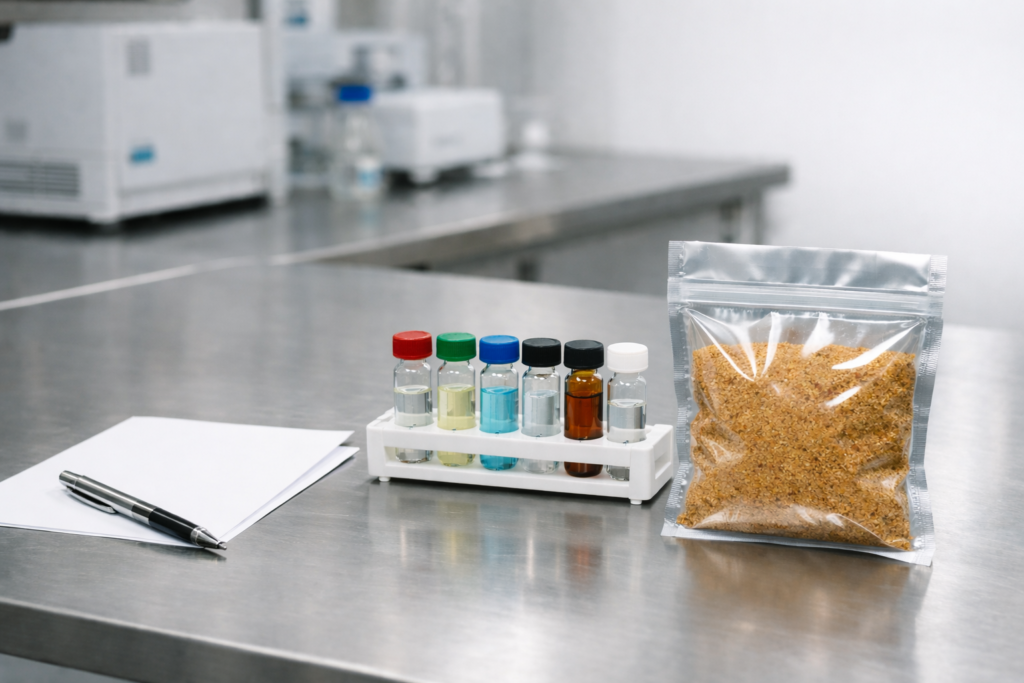
Pesticides
Pestizidrückstände können durch Anbau, Pflanzenschutzmaßnahmen oder Kontamination entlang der Lieferkette in Pflanzenprodukten auftreten. Bei Kratom sind Herkunft und Anbaupraktiken häufig nicht vollständig nachvollziehbar, und Rückstände lassen sich ohne Analytik nicht verlässlich beurteilen. Ein Screening zeigt, ob relevante Rückstände nachweisbar sind oder ob eine Charge unauffällig ist. Wir testen auf ein Panel von über 50 typischen Pestiziden und Herbiziden, das die in Pflanzenmaterial häufig relevanten Substanzen abdeckt.
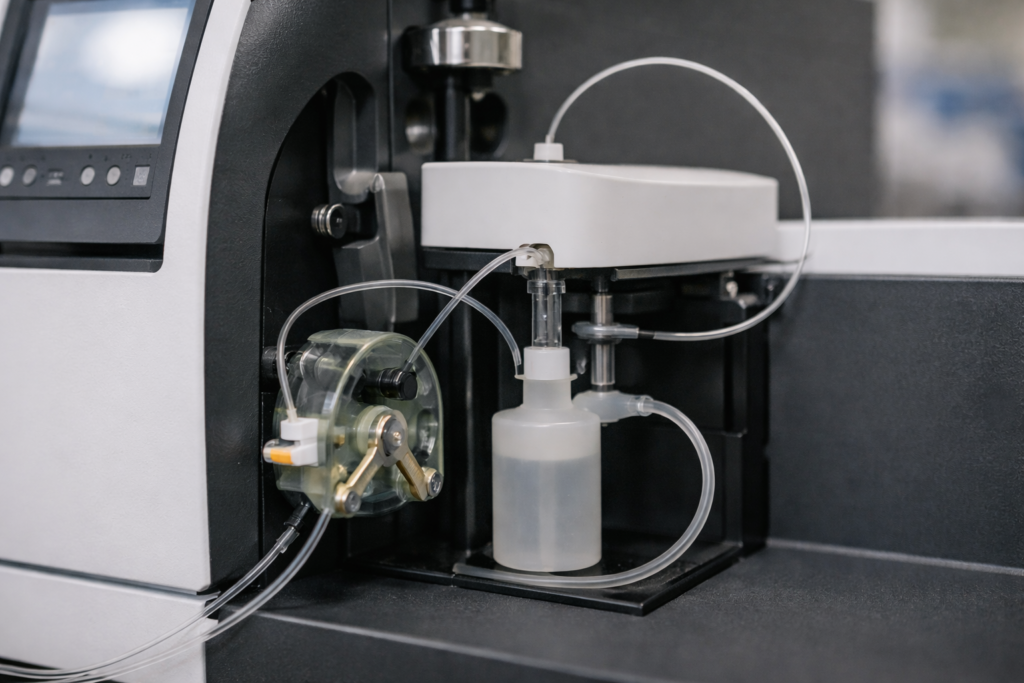
Heavy Metals
Heavy Metals können aus Boden, Wasser oder Verarbeitung in Pflanzenmaterial übergehen und sich je nach Herkunft und Charge unterscheiden. Da diese Elemente in geringer Konzentration geruchs- und geschmacksneutral sind, lassen sie sich ohne Analytik nicht zuverlässig erkennen. Wir analysieren Nickel, Arsen, Cadmium, Quecksilber and Blei im Spurenbereich, da diese Metalle häufig als toxikologisch relevante Kontaminanten in pflanzlichen Produkten betrachtet werden.
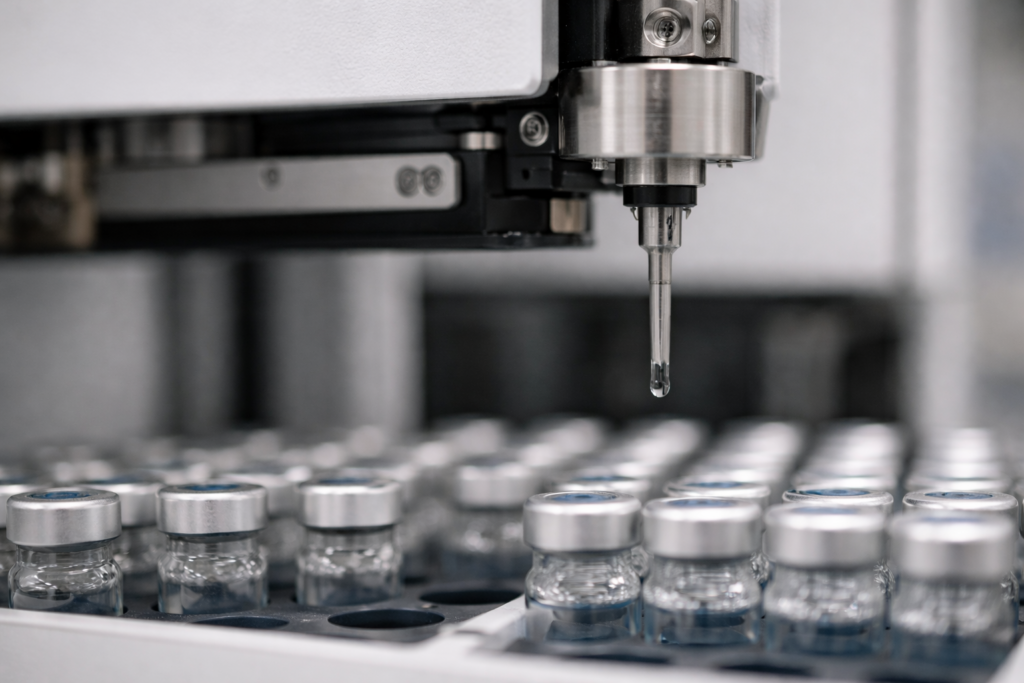
Residual solvents
Residual solvents können bei der Herstellung von Extrakten im Produkt verbleiben und sind daher ein relevanter Qualitätsparameter. Ihre Bedeutung ist nicht nur prozessbedingt, sondern auch toxikologisch, da für viele Lösungsmittel – etwa Methanol, n-Hexan oder Dichlormethan – gesundheitsbezogene Grenzwerte gelten. Über den Geruch der Probe lassen sich solche Rückstände nicht zuverlässig beurteilen. Wir bestimmen und quantifizieren Restlösemittel bis in den ppm-Bereich.
Methods
Unsere Analytik kombiniert standardisierte Probenvorbereitung, LC-MS/MS, ICP-OES und Headspace-GC-MS mit klar dokumentiertem Reporting.
Sample Preparation
Wir analysieren unterschiedlichste Kratom-Matrizes – von Pulver über Extrakte bis zu Tabletten. Durch spezialisierte Probenvorbereitung and routinemäßige Qualitätskontrollen sichern wir reproduzierbare Ergebnisse.
LC-MS/MS
Tandem-Massenspektroskopie gilt als Goldstandard für gezielte Quantifizierung. Wir verwenden isotopenmarkierte interne Standards, um Matrixeffekte sowie instrumentelle Einflüsse zu kompensieren.
ICP-OES
Für die Bestimmung von Metallen im Spurenbereich setzen wir ICP-OES mit breitem Elementspektrum ein. Damit erfassen wir relevante Schwermetalle auch bei komplexen Matrizes zuverlässig.
Headspace-GC-MS
Residual solvents in Extrakten bestimmen wir mittels Headspace-GC-MS. Das Verfahren eignet sich besonders für flüchtige organische Verbindungen und reduziert durch die Analyse der Gasphase den Eintrag von Matrixbestandteilen in das System.
Questions?
Answers regarding sample collection, processing time, and test results. If you have any questions, please feel free to contact us—we will get back to you as soon as possible.
Mail: info@kratomanalytik.de
Request an Analysis
To process your request, we need information about the sample and the scope of the analysis you require. We will then send you a quote with no obligation.
We usually get back to you within one business day.

Analytical services for kratom samples.
Our services are provided solely for the analytical testing and characterization of submitted samples. Analytical results do not approve for human consumption, certification of health safety, or confirmation of legal marketability.
Mail: info@kratomanalytik.de
Navigation
Copyright © 2026 Kratomanalytik.de. All rights reserved.